
Blog
Apollo Shield: Engineered Biohazard Containment
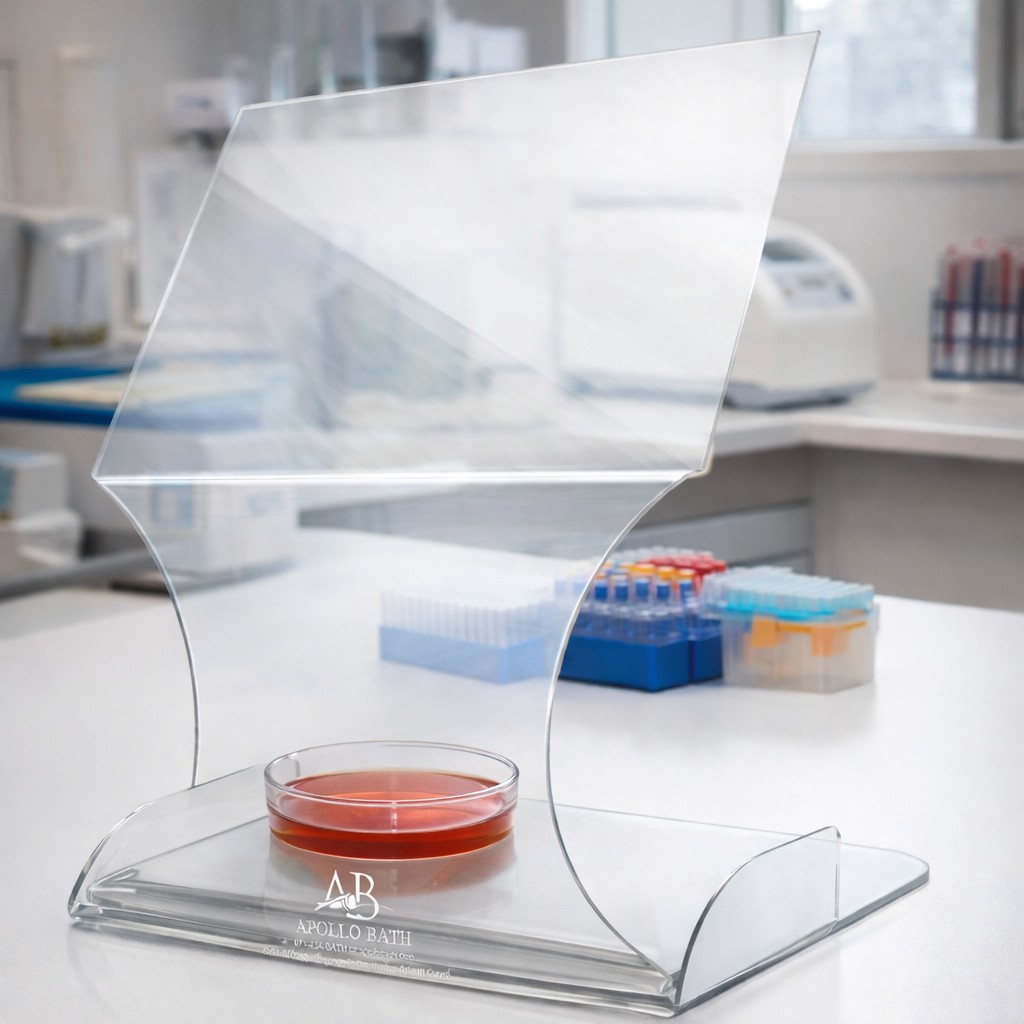
Optimizing Infection Control and Facility Compliance in High-Risk Sink Environments
THE CLINICAL CHALLENGE: THE SINK AS A PATHOGEN RESERVOIR
Recent clinical investigations have identified hospital sink drains and “hopper” sinks as primary reservoirs for Multi-Drug-Resistant Organisms (MDROs). Biofilms within these systems serve as a “launchpad” for pathogens during routine usage.
- The 7.25-Foot Danger Zone: While traditional “splash zones” were thought to be limited to 3 feet, a 2022 study by Smidt et al. demonstrated that droplets generated during manual cleaning and rinsing can travel up to 7.25 feet (2.2 meters), drenching personal protective equipment (PPE) and contaminating surrounding high-touch surfaces.
- The Pathogen Profile: Sink-related transmission is now linked to nearly 7% of all Pseudomonas aeruginosa HAIs in intensive care units. Other common isolates include Klebsiella pneumoniae, Acinetobacter baumannii, and Carbapenem-resistant Enterobacterales (CRE)—pathogens with high mortality rates and limited treatment options (Volling et al., 2024).
PAGE 1: RESEARCH-BACKED RISK MITIGATION
1. Beyond “Closed Lids”
Traditional methods, such as closing lids before flushing, are insufficient. Research indicates that aerosolization occurs at the moment water impacts a contaminated drain or basin. Engineering controls, specifically physical splash barriers, are classified by the CDC as a “Consideration 3a” priority for reducing exposure to Opportunistic Pathogens of Premise Plumbing (OPPP).
2. The Phenomenon
A 2024 study published in Open Forum Infectious Diseases identified “Super-splasher” sinks—units where rapid water inflow or slow drainage facilitates massive dispersal of Gram-negative bacilli. The Apollo Shield acts as a dedicated containment unit to neutralize these dispersal events at the source.